
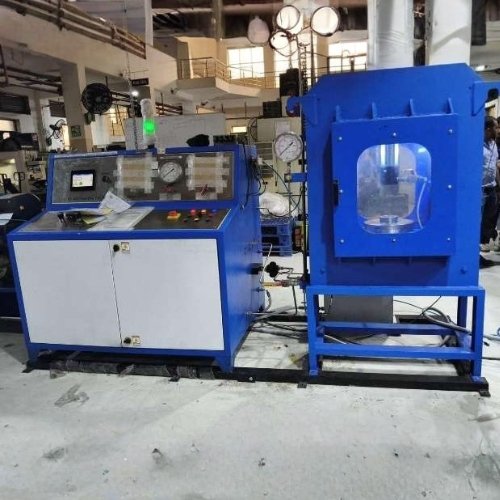
Hydro Test Machine Manufacturer in Ahmedabad , India
In industries where pipes, valves, cylinders, tanks, pressure vessels, and fabricated components operate under pressure, safety and reliability are non-negotiable. Even a minor defect in a pressure-containing component can result in leakage, operational failure, production downtime, environmental hazards, and significant financial losses. To prevent such issues, industries rely on Hydro Test Machine to verify the strength and integrity of components before they are installed or put into service.
A Hydro Test Machine is a specialized testing system used to perform hydrostatic pressure testing on various industrial products. By using water as the testing medium, the machine helps determine whether a component can safely withstand its designed operating pressure without leakage, deformation, or structural failure.
Hydro testing is one of the most widely accepted methods for pressure verification and quality assurance across industries such as oil and gas, petrochemicals, power generation, water treatment, construction, manufacturing, and engineering.
What is a Hydro Test Machine?
A Hydro Test Machine is a pressure testing system designed to evaluate the structural strength and leak-tightness of pressure-containing equipment using water or another incompressible liquid.
The machine generates controlled hydraulic pressure and applies it to the component being tested. The component is then inspected for pressure drops, visible leaks, cracks, deformation, or other signs of failure.
Hydro testing is considered one of the safest pressure testing methods because water is virtually incompressible, reducing the risk associated with stored energy during testing.
Hydro Test Machines are commonly used for testing:
- Industrial Valves
- Pipes and Pipelines
- Pressure Vessels
- Storage Tanks
- Heat Exchangers
- Gas Cylinders
- Boilers
- Fire Extinguishers
- Hydraulic Components
- Industrial Fittings
Why Hydro Testing is Important
Pressure-containing equipment must operate safely under real-world conditions. Hydro testing helps verify whether a component can withstand its intended operating pressure.
Ensures Product Safety
Testing confirms that equipment can safely handle operating pressure without failure.
Detects Manufacturing Defects
Hydro testing identifies cracks, weak welds, material defects, and sealing problems before installation.
Improves Reliability
Properly tested components perform more reliably in demanding industrial environments.
Supports Regulatory Compliance
Many industries require hydrostatic testing to meet safety and quality standards.
Reduces Operational Risk
Early defect detection minimizes the chances of accidents, leaks, and costly downtime.
Working Principle of a Hydro Test Machine
The operation of a hydro test machine is based on hydraulic pressure generation.
Component Preparation
The test specimen is securely connected to the testing machine.
All openings are sealed to prevent water leakage during testing.
Filling with Water
The component is filled completely with water.
Air trapped inside is removed to ensure accurate testing results.
Pressure Generation
A hydraulic pump gradually increases pressure inside the component.
The pressure level is raised according to the applicable testing standard or customer requirement.
Pressure Holding Phase
The component remains under pressure for a specified duration.
During this period, inspectors monitor for pressure drops, leaks, deformation, or structural failures.
Test Evaluation
If the component maintains pressure without leakage or damage, it passes the test.
After completion, pressure is released safely and the component is drained.
Major Components of a Hydro Test Machine
A hydro test machine consists of several critical components.
Hydraulic Pump
Generates the required testing pressure.
Water Reservoir
Stores water used during the testing process.
Pressure Gauge
Measures and displays test pressure accurately.
Control Panel
Allows operators to control and monitor testing operations.
Safety Relief Valve
Protects the system from excessive pressure buildup.
Test Fixture
Secures the component being tested.
Pressure Sensors
Monitor pressure stability during testing.
Data Recording System
Stores testing data for quality documentation and traceability.
Types of Hydro Test Machines
Manual Hydro Test Machine
Operated manually using hand pumps or basic hydraulic systems.
Suitable for low-volume testing applications.
Pneumatic Hydro Test Machine
Uses compressed air to drive hydraulic pressure generation.
Offers faster operation and improved productivity.
Automatic Hydro Test Machine
Equipped with PLC controls and automated testing sequences.
Ideal for high-volume industrial production environments.
Digital Hydro Test Machine
Features electronic pressure monitoring and digital reporting systems.
Provides highly accurate testing results.
Portable Hydro Test Machine
Designed for field testing and on-site pressure verification.
Widely used in pipeline and maintenance applications.
Hydro Test Machine Applications
Valve Manufacturing Industry
Used for shell testing, seat testing, and pressure verification of industrial valves.
Pipeline Industry
Tests pipes and pipelines before commissioning.
Pressure Vessel Manufacturing
Verifies structural integrity of pressure-containing equipment.
Boiler Industry
Ensures boiler components can safely withstand operating pressures.
Oil and Gas Industry
Used extensively for testing pipelines, valves, and pressure equipment.
Fire Safety Equipment Manufacturing
Tests fire extinguishers and pressure cylinders.
Water Treatment Plants
Ensures leak-free operation of piping and storage systems.
Chemical Industry
Validates pressure equipment used in chemical processing applications.
Advantages of Hydro Test Machines
High Testing Accuracy
Provides reliable verification of pressure integrity.
Enhanced Safety
Water-based testing reduces risks associated with compressed gas testing.
Early Defect Detection
Identifies weaknesses before products reach customers.
Improved Product Quality
Ensures every component meets quality requirements.
Compliance with Standards
Supports industry testing procedures and certification requirements.
Reduced Maintenance Costs
Preventive testing minimizes future repair expenses.
Increased Customer Confidence
Test-certified products demonstrate superior reliability and quality.
Hydro Test Machine vs Pneumatic Test Machine
Both systems are used for pressure testing, but their applications differ.
Hydro Test Machine
Uses water as the testing medium.
Safer for high-pressure testing because water stores less energy.
Ideal for structural strength verification.
Pneumatic Test Machine
Uses compressed air or gas.
More sensitive for detecting very small leaks.
Often used where water contamination must be avoided.
In many industries, both testing methods are used depending on the application.
Industries That Use Hydro Test Machines
Hydro testing equipment is widely used across various sectors.
Oil and Gas
Pipeline and valve testing.
Petrochemical Industry
Pressure equipment verification.
Power Plants
Testing boilers, valves, and pressure vessels.
Water Infrastructure
Testing pipelines and storage systems.
Manufacturing Industry
Quality control of fabricated pressure components.
Marine Industry
Testing shipboard piping systems and equipment.
Construction Sector
Pressure testing water supply systems.
Factors to Consider When Selecting a Hydro Test Machine
Before purchasing a hydro test machine, industries should evaluate several factors.
Maximum Test Pressure
The machine should support required testing pressures.
Component Size
Select equipment suitable for the size of products being tested.
Automation Requirements
Choose manual or automated systems based on production volume.
Testing Standards
Ensure compliance with industry-specific standards.
Data Logging Features
Digital reporting improves traceability and quality management.
Safety Systems
Look for pressure relief valves and emergency shutdown features.
Maintenance Requirements
Choose equipment that offers reliable operation and easy servicing.
Modern Advancements in Hydro Test Machines
Today’s hydro test machines incorporate advanced technologies that improve efficiency and accuracy.
Key innovations include:
- PLC-based automation
- Touchscreen controls
- Digital pressure monitoring
- Automatic pressure hold functions
- Real-time test data recording
- Computerized reporting
- Remote diagnostics
- Industry 4.0 compatibility
These features help manufacturers improve productivity while maintaining consistent testing quality.
Benefits of Hydro Testing in Industrial Manufacturing
Hydro testing is often considered the final quality checkpoint before products are released to customers.
It helps manufacturers:
- Verify product performance
- Reduce warranty claims
- Improve customer satisfaction
- Meet certification requirements
- Enhance brand reputation
- Minimize field failures
As industrial safety standards become more stringent, hydro testing continues to play a vital role in quality assurance programs.
Conclusion
A Hydro Test Machine is an essential industrial testing solution used to verify the strength, pressure resistance, and leak-tightness of pressure-containing components. By using controlled hydraulic pressure, these machines help manufacturers ensure product safety, regulatory compliance, and long-term reliability.
From valves and pipelines to pressure vessels, boilers, cylinders, and industrial equipment, hydro test machines serve as a critical quality assurance tool across multiple industries. Investing in the right hydro testing equipment not only improves product quality but also reduces operational risks, enhances customer confidence, and supports sustainable industrial growth.