
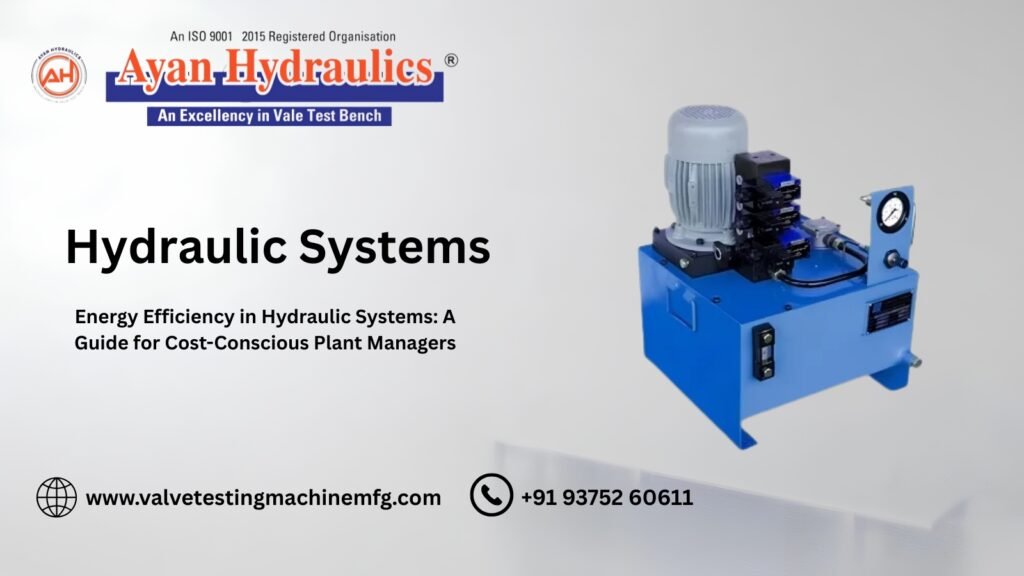
In the competitive landscape of industrial manufacturing, operational costs are often dominated by one silent factor: Energy Consumption. If your facility relies on heavy-duty Hydraulic Power Packs and machinery, small inefficiencies can lead to massive spikes in your monthly electricity bills.
Optimizing your hydraulic systems for energy efficiency isn’t just about “going green”—it is about driving up your profit margins by reducing overheads.
1. Why Hydraulic Systems Consume Power
Hydraulic systems are generally powerful, but they often run at full capacity even when the machine is in an idle or holding state.
The Semantic Link: By focusing on Load-Sensing Technology and Viscosity Management, you can significantly reduce the “parasitic” power loss that happens in most outdated hydraulic circuits.
The Inefficiency Trap: A system that is not properly sized for its load will constantly trigger the relief valve, dumping excess energy as heat. This wasted heat not only costs you electricity but also forces your cooling system to work harder, compounding the energy waste.
2. Strategies to Boost Efficiency
To immediately start saving on energy, focus on these three engineering areas:
Variable Displacement Pumps: If your current power pack uses a fixed-displacement pump, consider an upgrade to a variable displacement model. It only pumps the amount of fluid actually required by the Hydraulic Cylinders, preventing energy waste.
Proper Oil Viscosity: Many managers ignore the importance of oil temperature. If the oil is too thick (cold), the pump has to work harder. If it is too thin (hot), internal leakage increases. Maintaining the “sweet spot” temperature is vital for energy conservation.
Preventing Internal Leaks: As discussed in our previous guides, internal leakage (drift) means your pump is running more often to maintain system pressure. Regular seal maintenance is a direct investment in energy savings.
3. Monitoring Your Energy Footprint
You cannot improve what you do not measure.
Kilowatt-Hour (kWh) Tracking: Monitor the power consumption of your key hydraulic power units over a standard 8-hour shift.
Duty-Cycle Analysis: Does your machinery run at 100% load, or is it mostly idling? If your duty cycle is low, your system might be significantly oversized—a common issue we identify during our Testing Equipments audits.
Filtration Maintenance: Clogged filters force your pump to work against higher resistance, consuming more electricity per cycle.
4. Smart Engineering Choices
When investing in new Industrial Machinery, prioritize systems designed for “Demand-Based Power.” Modern engineering allows us to match the power output of a system exactly to the requirements of the specific manufacturing task.
At our facility in Ahmedabad, we prioritize designing systems that balance high-performance output with optimized power consumption, ensuring that our clients’ factories operate as leanly as possible.
Conclusion
Energy efficiency is not just a trend—it is a critical requirement for sustainable industrial growth. By optimizing your hydraulic systems, maintaining your seals, and choosing the right pumping technology, you can reduce your factory’s energy consumption, extend the life of your equipment, and significantly lower your operational costs.
Ready to audit your system for energy efficiency? Contact our engineering team or view our high-efficiency Hydraulic Power Packs here.