
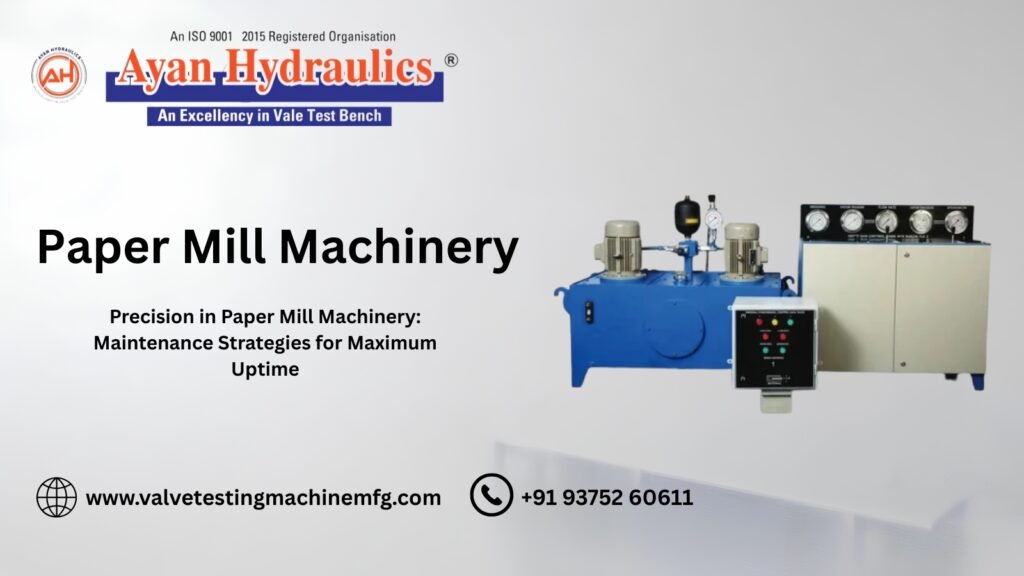
In the paper manufacturing industry, the machinery operates under relentless conditions—high speed, continuous moisture, and heavy loads. For plant managers, every minute of unexpected downtime translates directly into lost revenue. Achieving precision in paper mill machinery requires more than just reactive repairs; it demands a proactive maintenance strategy focused on hydraulic and mechanical synergy.
1. The Critical Role of Hydraulics in Paper Mills
Hydraulic systems are the muscle of a paper mill, controlling everything from press sections to roll loading.
Semantic Cluster: This aligns with Load Distribution, System Pressure Stability, and Continuous Duty-Cycle Management.
The Challenge: The humid environment of a paper mill is an enemy to traditional hydraulic components. Moisture ingress can degrade hydraulic fluid rapidly, leading to sluggish cylinder response and valve stiction.
2. Best Practices for Machinery Longevity
To keep your mill running at peak throughput, focus on these three areas:
Fluid Integrity Management: In a paper mill, your must be protected from high humidity. Use water-absorbing breathers on your reservoirs and ensure your filtration system is rated for the specific particulate size required by your high-precision valves.
Roller Alignment and Pressure Balance: Uneven pressure across your rollers leads to paper breakage and uneven thickness. Regular load testing using specialized ensures that each hydraulic cylinder is exerting the exact force required across the entire web width.
Surface Finish Maintenance: The rolls and press sections in paper mills are sensitive. Even microscopic corrosion can be amplified by high-speed rotation. Keep all exposed cylinder rods and shafts coated with protective, moisture-resistant lubricants.
3. Reducing Downtime Through Proactive Inspection
Reactive maintenance is expensive. Instead, implement a “Condition-Based” monitoring schedule:
Vibration Analysis: Use sensors on your hydraulic pump units to detect early signs of bearing wear.
Seal Audit: Schedule quarterly inspections of your . Replacing a seal during a planned shutdown is 90% cheaper than replacing a rod after a failure during peak production.
Standardized Spare Parts: Keep a documented inventory of wear-and-tear parts. When it comes to specialized paper mill components, having the right part on hand prevents 48-hour delays.
4. Why Engineered Precision Matters
Paper mills demand high-torque, high-consistency performance. If your machinery is frequently failing to meet output targets, it may be due to “component fatigue.”
At our manufacturing facility in Ahmedabad, we engineer specifically for the intense duty cycles of the paper industry. By using high-grade materials and corrosion-resistant coatings, our components are designed to thrive in high-moisture environments, reducing the frequency of your maintenance intervals.
Conclusion
Optimizing your paper mill machinery is a marathon, not a sprint. By focusing on fluid purity, load consistency, and predictive seal inspections, you can significantly reduce downtime and ensure that your production remains competitive and reliable.
Explore our range of high-performance Paper Mill Machinery today and streamline your compliance process.