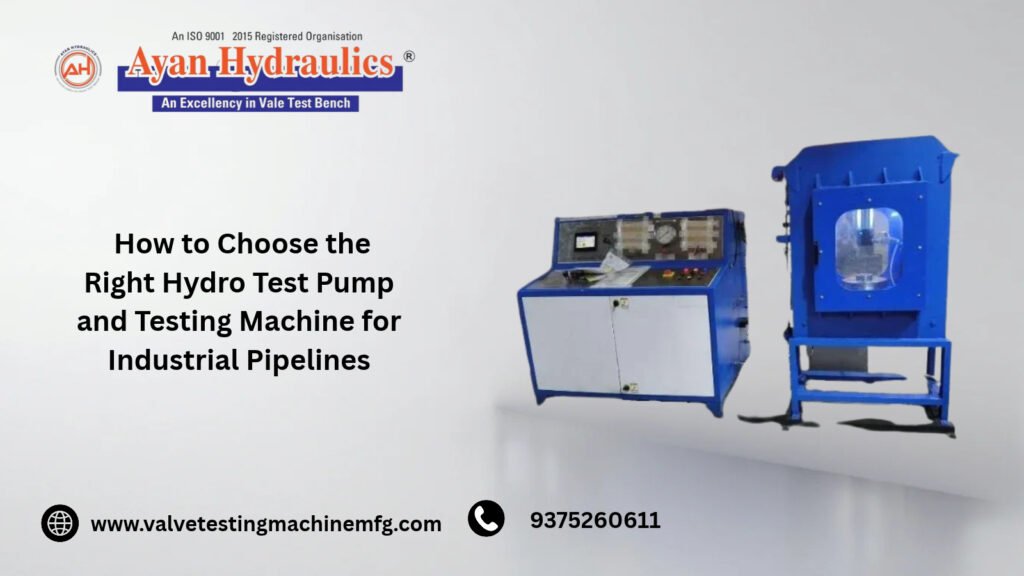
When commissioning new industrial piping networks, pressure vessels, or long-distance transmission lines, verifying structural integrity before operation is a mandatory safety requirement. A failure during active service can lead to catastrophic environmental damage, massive financial loss, and severe safety hazards.
The heart of this verification process is the hydro test machine and high-pressure test pump. Choosing the correct pumping system ensures rapid filling, precise pressure ramping, and reliable hold testing without stalling or damaging the pipeline.
1. Matching Pump Displacement to System Volume
The first step in selecting a hydro test setup is calculating the internal volume of the vessel or pipeline you need to test.
Fill Cycle vs. Test Cycle: Testing large pipelines requires massive volumes of water. Using a tiny high-pressure pump to fill an entire pipeline will take hours.
The Two-Stage Solution: Ideal hydro test units combine a high-flow low-pressure centrifugal pump (for rapid water filling and air purging) with a high-pressure reciprocating plunger pump (for slow, controlled pressure ramping up to test thresholds).
2. Choosing Between Reciprocating and Triplex Pumps
The pressure-generating mechanism dictates the durability and pulsation behavior of your hydro test machine:
Triplex Plunger Pumps: Provide smooth, continuous flow with minimal pressure pulsation, making them the gold standard for accurate pressure hold testing and chart recording.
Reciprocating Pumps: Offer rugged reliability for heavy industrial environments, easily handling harsh water conditions and chemical additives.
3. Selecting Power Drives (Electric, Pneumatic, or Engine-Driven)
Consider where your hydro testing will take place:
Electric Motor Drives: Perfect for stationary shop floors and manufacturing plants where stable electrical power is available.
Air-Driven Booster Pumps: Excellent for hazardous or explosive environments (like oil and gas plants) where electricity poses a spark risk.
Diesel Engine Drives: Essential for remote, out-of-doors cross-country pipeline testing sites lacking grid power.
4. Essential Safety Features in Hydro Test Units
High-pressure water storage carries inherent risks. Ensure your selected machine includes:
Adjustable Pressure Relief Valves: To prevent accidental over-pressurization past the vessel’s maximum design limit.
Liquid-Filled Pressure Gauges: Dampen mechanical vibrations for clear, stable readings during hold tests.
Internal Link Recommendation: To learn how to eliminate trapped air safely before raising pressure, read our related guide on How to Safely Vent Trapped Air Before Starting High-Pressure Hydro Tests. For specialized valve testing infrastructure, explore our primary Valve Testing Machine catalog.
Conclusion
Choosing the right hydro test pump and testing machine balances volume filling speed, pressure capacity, and site power availability. Investing in a robust, dual-stage testing unit ensures efficient, safe, and certified pipeline commissioning every time.
Looking for a reliable, heavy-duty Hydro Test Machine for your pipeline or pressure vessel projects? Contact our engineering team today to discuss custom pump capacities, mobile units, and precision pressure testing solutions.