
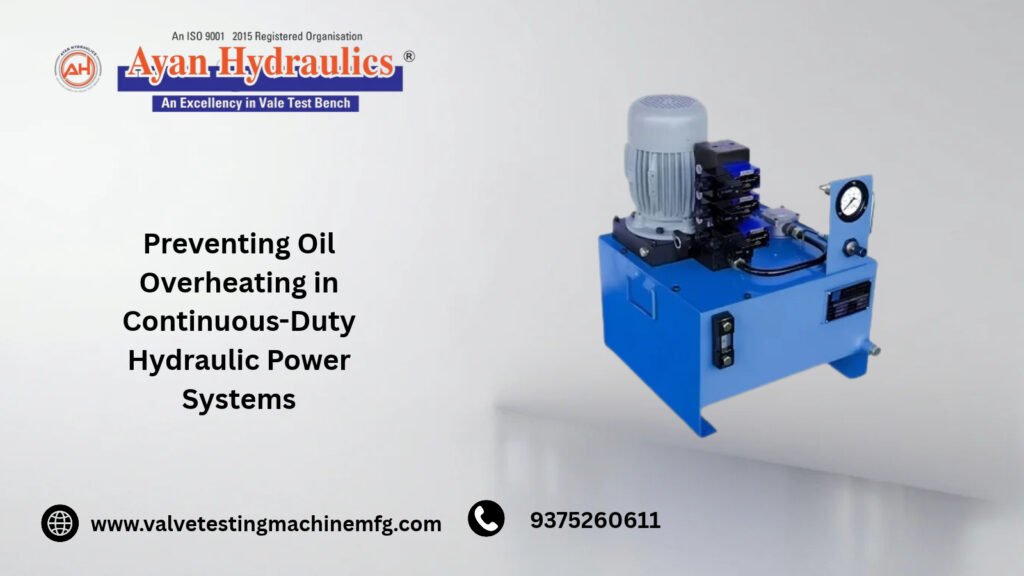
In heavy industrial manufacturing, machinery often runs continuously for hours under intense loads. While your hydraulic power pack is built to handle heavy duty cycles, heat is its number one enemy. When hydraulic oil overheats, its viscosity drops dramatically, leading to internal pump slippage, sluggish actuator movement, rapid seal degradation, and varnish buildup inside valve manifolds.
Understanding the root causes of thermal breakdown and implementing proper cooling strategies ensures your hydraulic power units remain efficient and reliable during long operational shifts.
Common Causes of Hydraulic Overheating
Before solving thermal issues, you must identify why the fluid is generating excess heat:
Relief Valve Bypass: If a system pressure relief valve is improperly set or stuck partially open, high-pressure fluid constantly dumps across the valve seat back to the tank at high velocity, converting pump energy directly into heat.
Pump Cavitation: Restricted suction lines or clogged inlet strainers starve the pump, creating vapor bubbles that collapse violently under pressure, generating intense localized heat.
Undersized Reservoirs: If the fluid tank holds too little oil, the fluid does not have enough time to rest, shed heat across the tank walls, and release entrained air before being drawn back into the circuit.
Choosing the Right Cooling Solution
When natural radiation and convection across the reservoir walls are insufficient to maintain safe operating temperatures (typically between 120°F to 140°F / 49°C to 60°C), active cooling is required:
Air-Blown Heat Exchangers: The most common industrial solution. Hot hydraulic oil passes through an aluminum radiator core while an electric fan blows ambient air across the fins. They are easy to install and require no external water supply.
Water-Cooled Heat Exchangers (Shell-and-Tube or Plate): Highly efficient for heavy continuous-duty systems, utilizing a dedicated secondary loop of cooling tower water or chilled water to draw heat away from the hydraulic fluid rapidly.
Selecting Correct Hydraulic Oil Viscosity Grades
Viscosity is a measure of an oil’s resistance to flow. Using the wrong grade can trigger immediate thermal issues:
ISO VG Standards: Industrial power units typically utilize ISO VG 32, 46, or 68 anti-wear hydraulic oils depending on ambient operating temperatures.
The Danger of Thinning: As oil heats up, it thins out. If the oil becomes too thin under high operating temperatures, it loses its lubricating film strength, leading to metal-on-metal wear inside pumps and valves.
Routine Thermal Management Checklist
Monitor Sight Gauges: Regularly check temperature gauges integrated into the reservoir sight glass.
Clean Heat Exchanger Fins: Dust and grime buildup on air-cooled radiator fins blocks airflow, rapidly cutting cooling efficiency.
Filter Maintenance: Keep return filters clean to ensure smooth fluid circulation without excessive pressure drop.
Internal Link Recommendation: To learn how proper tank sizing prevents heat buildup from the start, read our guide on Why Proper Reservoir Design Matters in Industrial Hydraulic Power Packs. For specialized component testing infrastructure, explore our main Valve Testing Machine product catalog.
Conclusion
Preventing oil overheating requires a combination of proper system design, efficient component sizing, and active thermal management. By controlling relief bypass, maintaining clean heat exchangers, and using correct viscosity grades, your hydraulic power systems will deliver consistent, long-term performance.
Looking for a custom hydraulic power pack engineered with efficient thermal management and cooling systems? Contact our engineering team today to discuss your exact industrial specifications.