
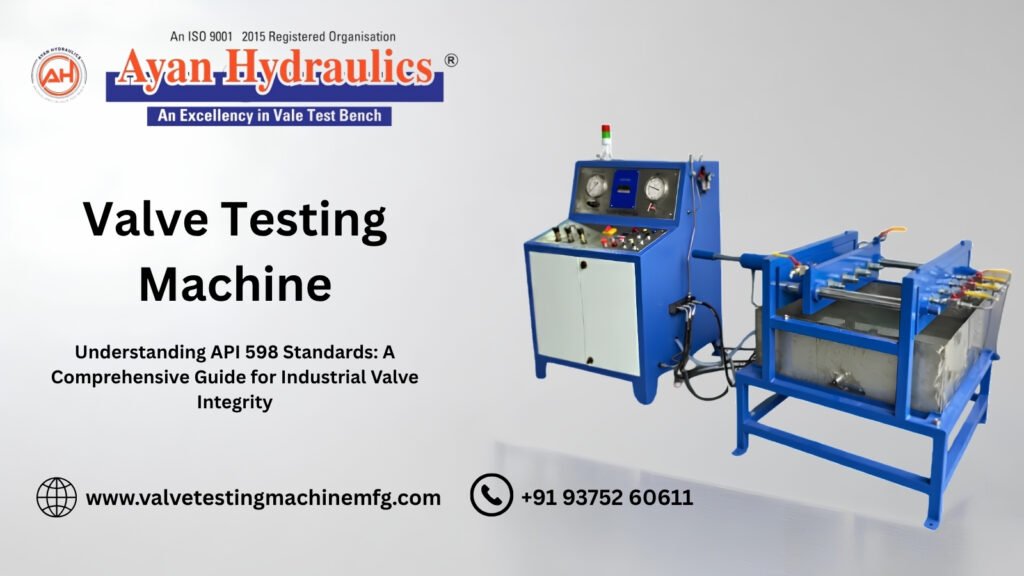
In the high-pressure world of industrial piping and manufacturing, valve failure is a critical operational risk. Whether you are dealing with petrochemical pipelines, water treatment plants, or complex hydraulic circuits, the valve is the primary safeguard. For plant managers and quality engineers, the API 598 standard serves as the gold standard for valve inspection. But how do you translate these rigorous requirements into your day-to-day operations to ensure 100% reliability?
1. What Exactly is the API 598 Standard?
The American Petroleum Institute (API) 598 standard defines the minimum requirements for the inspection, examination, and testing of gate, globe, check, and ball valves. It provides a structured protocol to verify that the valve’s pressure-containing components—the body, bonnet, and seat—are free from manufacturing defects.
Semantic Link: Following this standard is essential for ensuring Pressure-Retaining Integrity and Seat Tightness in industrial environments.
2. Core Testing Procedures for Compliance
To ensure total compliance, your testing bench must perform three primary checks defined by API 598:
Shell Test: A test of the pressure-containing parts of the valve under pressure.
Back-seat Test: Verifying that the back-seat seal holds effectively when the valve is in the full-open position.
Closure (Seat) Test: The most critical phase, where you check the tightness of the seal against the rated pressure to prevent leakage during operation.
3. The "Manual vs. Automated" Debate: Why Cluster Authority Matters
Many manufacturers still rely on manual clamping systems. However, in modern SEO terms, “manual testing” is often associated with high variance and lower reliability. By utilizing an automated Valve Testing Machine, you align your facility with Industry 4.0 standards.
Cluster Benefit: Using an automated machine eliminates human error, ensures repeatable clamping force, and provides digitized test results. This data-driven approach is what Google and your industrial clients look for when searching for a reliable “Valve Testing Machine Manufacturer.”
4. Why Precision Equipment is the Backbone of QC
Precision testing requires hardware that removes human variables. When you use advanced Testing Equipments, you gain several strategic advantages:
Real-Time Data Acquisition: Automated logging of pressure decay, which is vital for long-term audit trails.
Safety Interlocks: Automated systems that prevent high-pressure release unless the valve is properly clamped, reducing workplace hazards.
Audit Readiness: Compliance with ISO and API auditing is simplified when your machinery provides automated, time-stamped test certificates.
5. Best Practices for Your Testing Facility
Calibration Strategy: A high-precision machine is only effective if its pressure gauges are calibrated annually against national standards.
Media Filtration: Whether using water or air, ensuring the testing media is clean prevents contamination of the valve seat—a primary cause of false “leakage” results.
Integration: Ensure your test bench is powered by a high-efficiency Hydraulic Power Pack to ensure the clamping force remains constant throughout the entire shell test cycle.
Conclusion
Compliance with API 598 is not just a regulatory hurdle; it is a competitive advantage that builds trust with global clients. If your current testing setup is struggling to meet modern industrial demands, it may be time to upgrade to a precision-engineered solution.
Explore our range of high-performance Valve Testing Machines today and streamline your compliance process.