
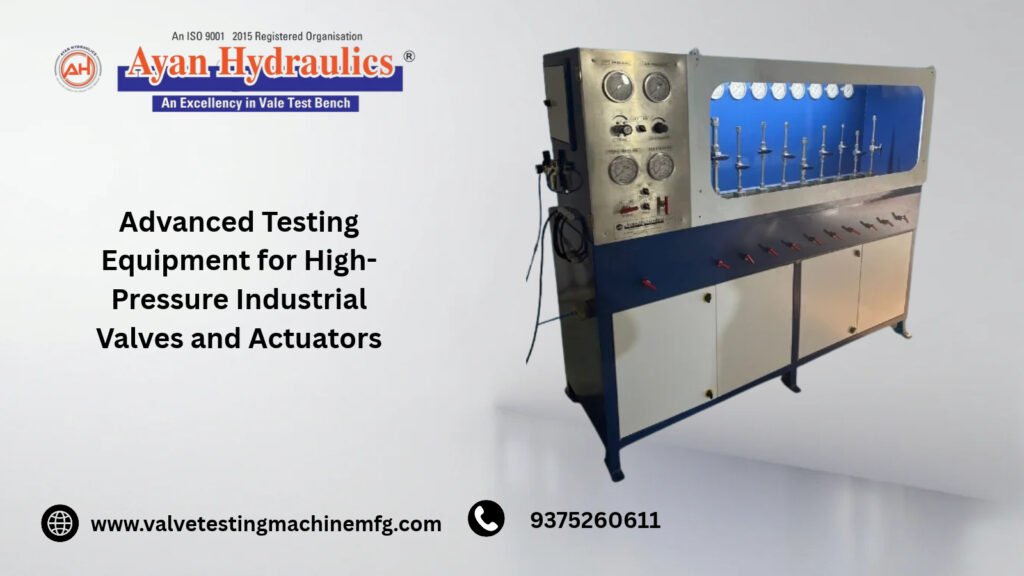
In modern heavy industries—ranging from oil and gas pipelines to chemical processing plants and power generation facilities—industrial valves operate under extreme pressures and temperatures. A structural failure or internal leak in a high-pressure valve can lead to catastrophic environmental hazards, severe safety risks, and immense financial losses.
To ensure absolute reliability, valve manufacturers and plant maintenance facilities rely on specialized testing equipment designed to simulate real-world operating loads and verify zero-leakage performance before installation.
1. Key Components of Modern Valve Testing Systems
State-of-the-art valve testing rigs combine heavy mechanical engineering with precise hydraulic and electronic controls:
High-Pressure Hydrostatic Pumps: Capable of generating intense fluid pressures (often exceeding 10,000 PSI) to test the structural integrity of valve bodies, bonnets, and wall thicknesses.
Robust Clamping Benches: Heavy-duty hydraulic clamping cylinders secure flanged or threaded valves tightly against seal plates, holding immense separation forces safely during testing.
Pneumatic Low-Pressure Circuits: Integrated air and nitrogen test manifolds used alongside water tanks or bubble-detection fluid to verify seat tightness.
2. Advantages of Automated Testing Consoles
Modern testing equipment has evolved far beyond manual pressure gauges and hand-operated needle valves:
Digital Data Logging: Advanced control panels record exact pressure curves, test durations, and minute leakage rates automatically, generating certified quality compliance reports.
Programmable Test Sequences: PLCs automate the entire fill, pressurize, hold, vent, and drain cycle, ensuring consistent testing parameters across high-volume production batches.
Internal Link Recommendation: To learn how these testing systems integrate into heavy industrial sectors like pulp mills, read our guide on Importance of Valve Testing Machines in Pulp and Paper Mill Maintenance. For specialized testing infrastructure, explore our main Valve Testing Machine product catalog.
Conclusion
Investing in advanced testing equipment is essential for manufacturers committed to delivering flawless, certified valves to the global industrial market. By combining robust hydraulic clamping with digital automation, facilities can guarantee absolute safety and compliance.
Looking for advanced testing equipment and custom-engineered valve test benches for your manufacturing plant? Contact our engineering team today to discuss reliable testing solutions tailored to your specifications.